David Carter · 7 October 2026
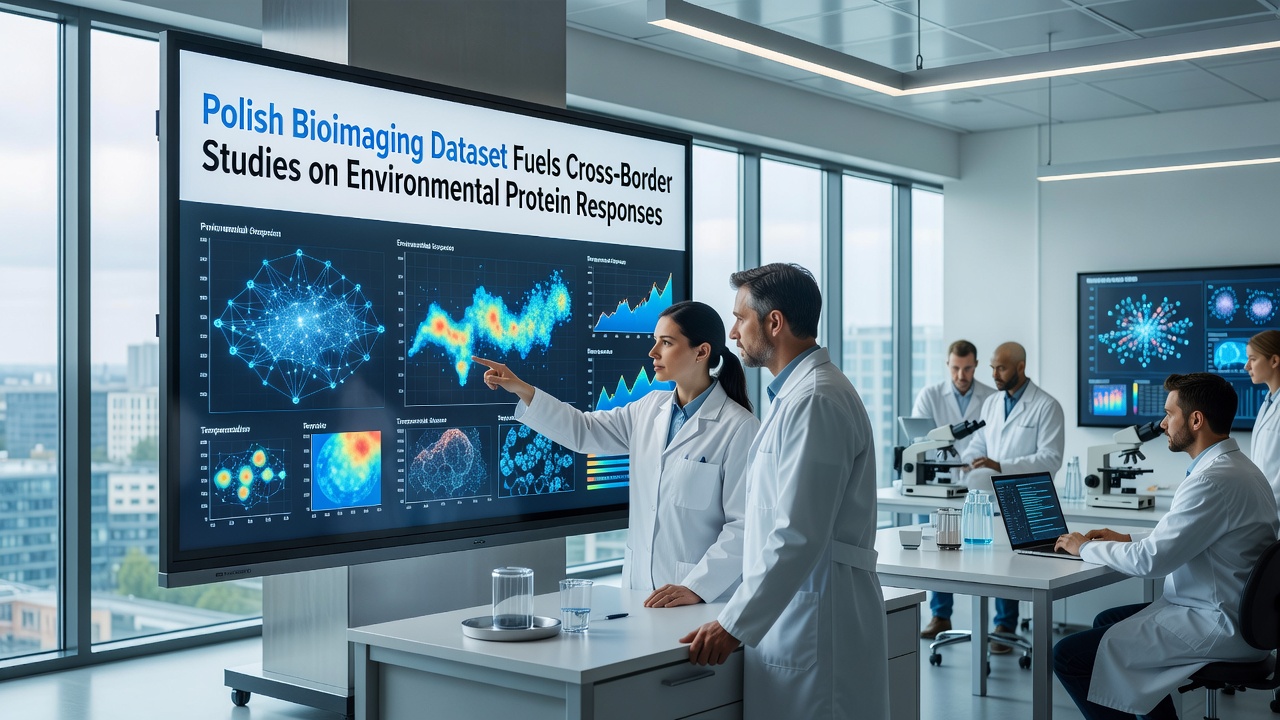
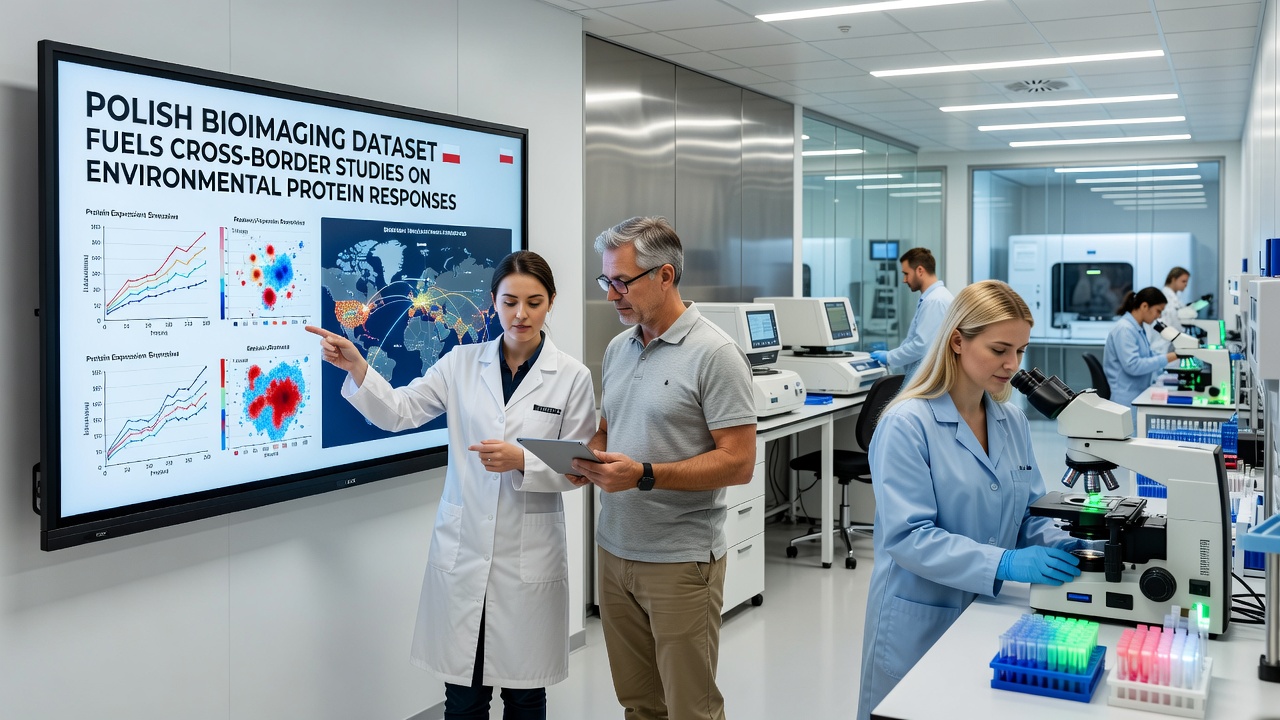
Polish Bioimaging Dataset Fuels Cross-Border Studies on Environmental Protein Responses
Polish research institutions released a large-scale bioimaging dataset in 2025 that captures protein behaviors across multiple environmental stressors, and this resource has already drawn teams from several countries into joint projects examining cellular responses at the molecular level, while the data covers thousands of protein samples exposed to shifts in temperature, pH levels, salinity, and chemical pollutants.
Dataset Contents and Technical Specifications
Researchers compiled the collection using advanced fluorescence microscopy and cryo-electron tomography techniques that produce three-dimensional reconstructions of protein complexes, and the files include time-lapse sequences recorded at nanoscale resolution along with metadata on each environmental parameter applied during imaging sessions. The dataset spans more than 12,000 individual protein entries drawn from bacterial, plant, and mammalian sources, which allows comparative analyses across species boundaries, and file formats follow community standards that integrate directly with common analysis platforms used in structural biology labs worldwide.
Early International Collaborations
Teams based in Germany and Sweden began downloading portions of the archive within weeks of its public release, while Canadian groups joined shortly afterward to align the Polish images with their own climate-chamber experiments on crop proteins. These partnerships focus on shared protocols for quantifying structural changes, and participants exchange processing scripts that automate the detection of folding anomalies triggered by oxidative stress or heavy-metal exposure. Data shows that certain chaperone proteins maintain stability longer than expected under combined heat and acidity, a pattern confirmed across independent labs that reprocessed the same image stacks.
Observers note that the shared resource reduces duplication of expensive imaging runs, and institutions without access to high-end microscopes can still contribute computational analysis or validation experiments. One study revealed that Arabidopsis thaliana proteins involved in drought signaling exhibit measurable domain rearrangements at salt concentrations previously considered non-disruptive, and the findings prompted follow-up work in Australia on related cereal crops.
October 2026 Milestones and Planned Experiments
Planning documents indicate that a coordinated round of experiments will launch in October 2026, bringing together Polish, Dutch, and Japanese researchers to test how the documented protein shifts influence downstream signaling pathways in living cells. The schedule includes joint workshops hosted at the original imaging facility in Warsaw, and participants will use the dataset as a reference library while generating new live-cell recordings under controlled pollutant gradients. Figures released by the organizing committee project that roughly 40 additional laboratories will register for access by that date, expanding the geographic reach into South America and Southeast Asia.
Analytical Tools and Standardization Efforts
Software developers have begun building plugins that import the Polish image stacks into existing molecular dynamics packages, and these tools allow users to overlay environmental metadata directly onto simulation trajectories. Standardization meetings held earlier this year established common naming conventions for stress categories, which simplifies meta-analyses across independent publications. Research indicates that automated classification algorithms trained on the dataset achieve higher accuracy when identifying early signs of protein aggregation compared with models trained on smaller, single-lab collections.
Broader Scientific Implications
The availability of uniformly acquired images supports investigations into protein resilience under conditions expected to intensify with climate variability, and several groups have already linked specific structural motifs to survival advantages in extremophile organisms. European Bioinformatics Institute resources now host mirrored copies of the dataset, which improves download speeds for researchers outside Europe and ensures long-term preservation through established archival protocols. Parallel efforts in the United States leverage National Institutes of Health repositories to cross-reference the Polish data with genomic expression profiles, creating multi-omics layers that were previously difficult to assemble.
Conclusion
The Polish bioimaging dataset continues to serve as a foundation for studies that examine how proteins respond to combined environmental pressures, and ongoing cross-border projects demonstrate its utility in accelerating discovery while maintaining rigorous data standards. Additional releases scheduled through 2027 will incorporate expanded stress conditions and new species, further widening the scope for collaborative research that spans continents and disciplines.