Finley Hansen · 4 November 2026
Polish Symposium Tackles Ethical Dilemmas in Microscopy Data Sharing for Protein Research
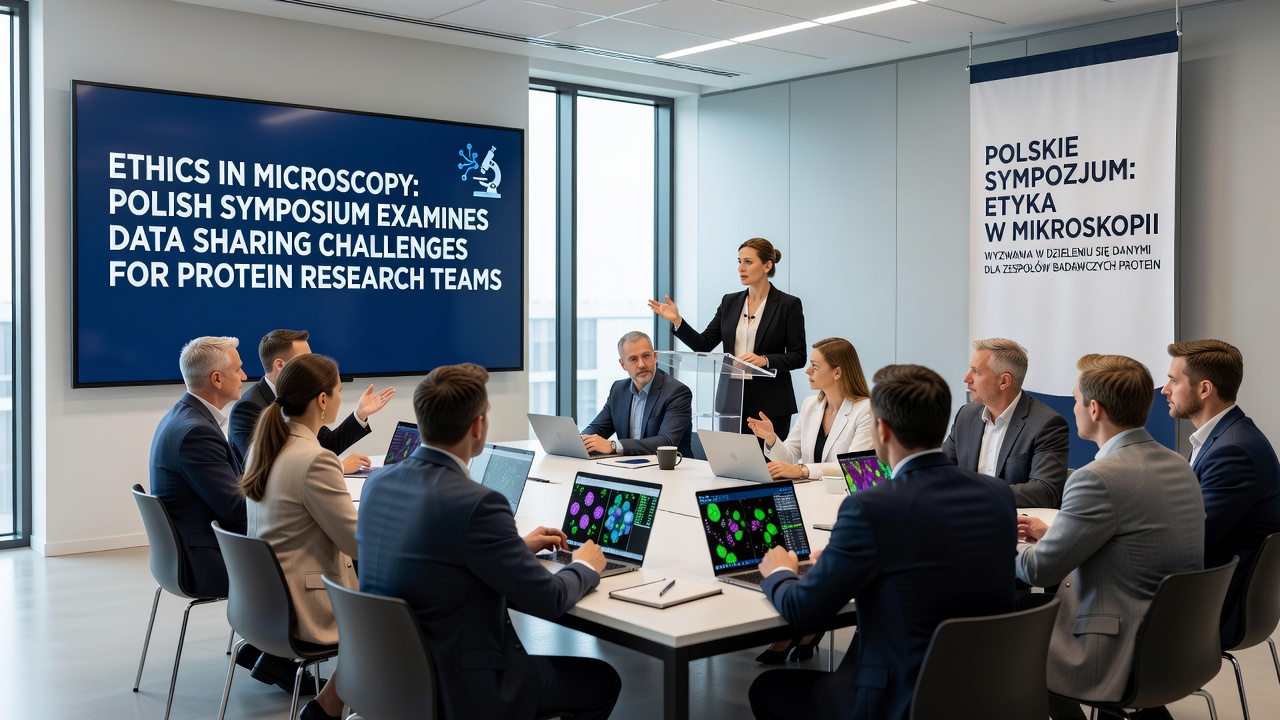
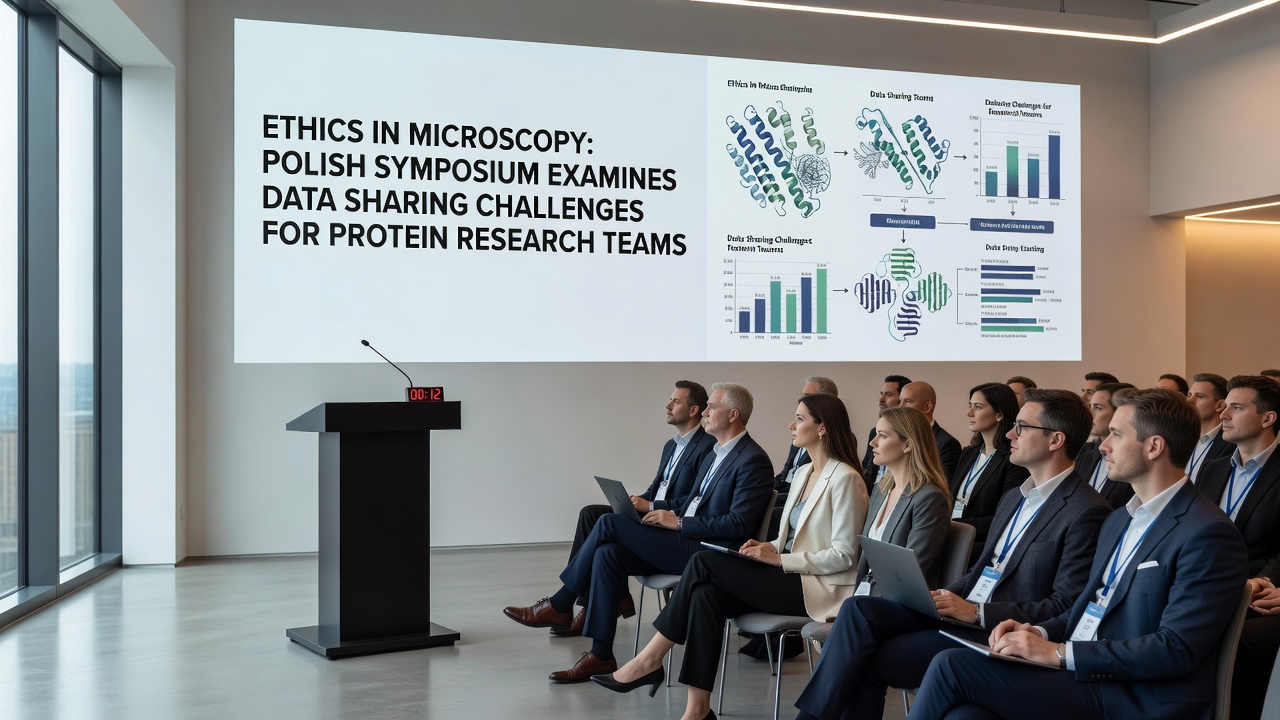
Protein research teams across Poland and neighboring countries face mounting pressure to share high-resolution microscopy datasets, yet ethical frameworks often lag behind technological capabilities, and a symposium scheduled for November 2026 in Warsaw aims to address these gaps directly. Organizers from several Polish universities and bioimaging centers expect over 200 participants to examine consent protocols, ownership questions, and cross-border transfer rules that affect studies of cellular structures under varying environmental conditions.
Background on the November 2026 Gathering
The event builds on earlier European initiatives that highlighted inconsistencies in how microscopy facilities handle raw image files containing sensitive biological information, while researchers note that protein interaction data often reveals details about genetic variations or disease markers that require careful handling under existing privacy regulations. Discussions will draw from case studies involving multi-institutional projects where teams struggled to align Polish data protection standards with those in partner laboratories abroad.
Core Challenges in Data Sharing Practices
Ownership of microscopy outputs remains a frequent point of contention because individual scientists, funding bodies, and host institutions each claim partial rights to the same image stacks and derived models, and this fragmentation slows collaborative analysis of protein responses to environmental stressors. Symposium speakers plan to review instances where delayed data releases hindered verification of findings on cellular reactions, leading some teams to adopt interim agreements that specify usage windows and attribution requirements.
Consent procedures also demand attention since samples collected for one study may later prove valuable for unrelated protein mapping efforts, yet original donors rarely anticipate such secondary applications, and Polish ethics boards now require explicit language in participant forms that anticipates future microscopy-based inquiries. Data from similar past meetings shows that clearer consent language correlates with faster approval times for subsequent sharing requests.
International Perspectives and Regulatory Alignment
Representatives from the European Research Council will outline how Horizon Europe funding conditions now tie data accessibility to grant compliance, whereas teams must demonstrate that shared microscopy files meet both technical standards and ethical review criteria before publication, and this requirement has prompted several Polish labs to revise internal workflows ahead of the 2026 symposium. A parallel session will compare these rules with approaches taken by the Australian Research Council, where emphasis falls on metadata documentation that preserves context without exposing identifiable sample origins.
One presentation will cover a 2024 collaboration between Polish and Canadian researchers that produced a shared repository of environmental protein response images, yet the project encountered delays when differing interpretations of anonymization standards arose, and participants expect the upcoming symposium to produce model templates that future teams can adapt without repeating those negotiations.
Practical Tools and Emerging Solutions
Workshops scheduled during the event will introduce software platforms that automate de-identification of microscopy metadata while retaining scientific utility, and early adopters report reduced administrative overhead when preparing datasets for multi-team analysis. Observers note that such tools gain traction only when accompanied by training sessions that clarify remaining legal responsibilities for the originating institutions.
Case examples will include a recent Polish-led study on protein folding under temperature stress where partial dataset release allowed external validation without compromising proprietary sample preparation methods, and the success hinged on tiered access levels that symposium organizers hope to codify into broader guidelines.
Conclusion
The November 2026 symposium represents one step in an ongoing effort to synchronize ethical standards with the rapid pace of microscopy advances in protein research, and outcomes from the sessions may influence how teams structure future collaborations across borders. Continued dialogue among regulators, bioimaging facilities, and research groups will determine whether these discussions translate into enforceable practices that support both scientific progress and participant protections.