Finley Hansen · 23 September 2026
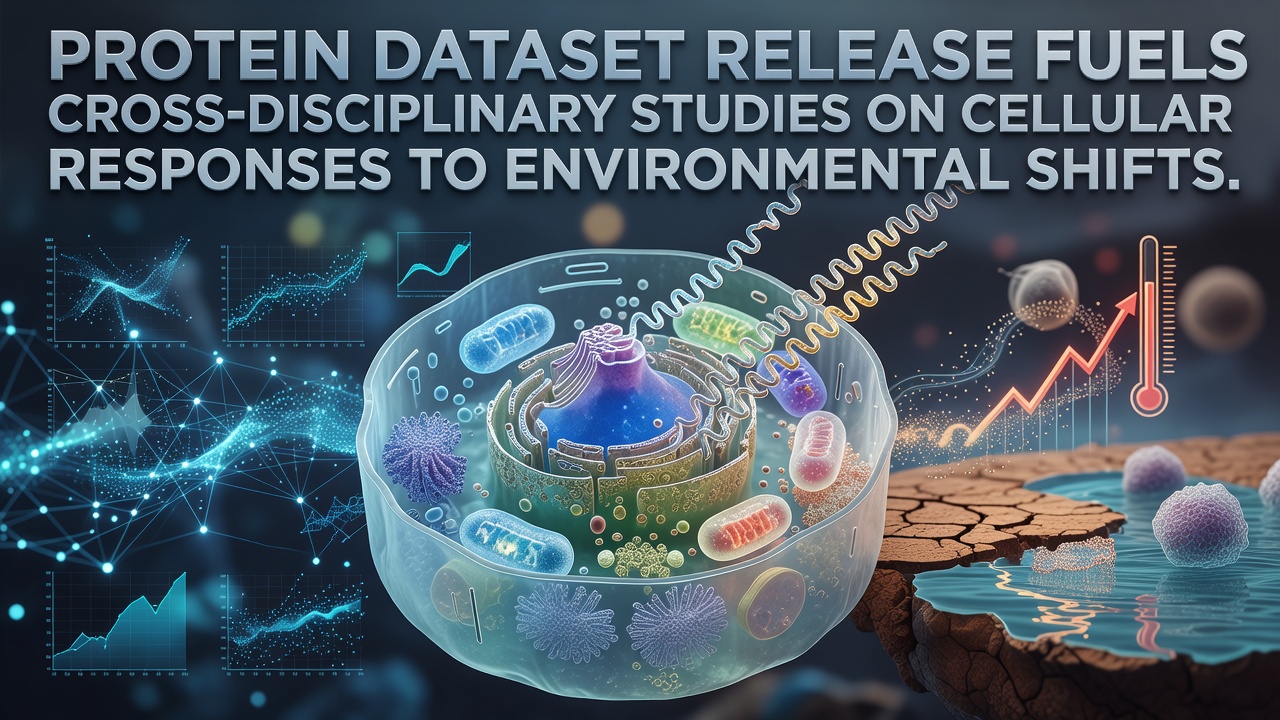
Release of Extensive Protein Dataset Opens Doors for Multi-Field Investigations into Cellular Reactions Under Environmental Pressures
The release of a large-scale protein dataset in September 2026 has provided researchers with detailed molecular information that supports studies across biology, environmental science, and computational fields, and this development allows teams to examine how cells adjust protein expression and function when facing shifts in temperature, pH levels, nutrient availability, and other external factors.
Data from the collection covers thousands of protein sequences and their modifications under controlled environmental conditions, which enables scientists to map response pathways more precisely than before, and institutions in Europe and North America have already begun integrating the information into ongoing projects that combine wet-lab experiments with machine-learning models.
Dataset Composition and Access Details
Compiled through coordinated efforts at multiple facilities, the dataset includes quantitative measurements of protein abundance, post-translational modifications, and interaction networks collected from model organisms such as yeast, bacteria, and mammalian cell lines, while each entry carries metadata on the exact environmental parameters applied during sampling, and users can download the full resource through public repositories hosted by international research consortia.
Access protocols require registration with an institutional email, after which researchers receive formatted files compatible with standard analysis platforms, and early adopters report that the structured organization reduces preprocessing time significantly compared with smaller, fragmented collections released in prior years.
Cross-Disciplinary Applications Emerging in Practice
Biologists working alongside data scientists have started applying the dataset to investigate heat-shock responses in plant cells, and one team at a Canadian university combined the protein profiles with climate-model projections to predict how crop species might maintain cellular stability under rising average temperatures, whereas environmental chemists have used the same source material to study how ocean acidification alters microbial protein networks that drive carbon cycling.
Computational groups in Australia and the United Kingdom have trained predictive algorithms on the provided interaction data, which allows them to simulate cellular outcomes under hypothetical stress scenarios without immediate need for new laboratory runs, and these models are now being validated against independent experimental sets collected by separate laboratories.

Integration with Existing Research Infrastructure
National funding agencies have noted the dataset aligns with ongoing initiatives that promote open data sharing, and the European Molecular Biology Laboratory has incorporated selected subsets into its training modules for early-career researchers who focus on systems-level biology.
Meanwhile the National Science Foundation in the United States lists the resource among recommended starting points for proposals that address cellular resilience under changing environmental conditions, which encourages proposals that span traditional departmental boundaries.
Technical Features Supporting Broader Use
Each protein record contains standardized identifiers that link directly to established databases, and the inclusion of time-series measurements under gradual environmental ramps lets users track dynamic changes rather than static snapshots alone, while quality-control annotations flag any entries that required additional verification steps during curation.
Software tools developed in parallel allow batch querying of the collection, and these utilities support export into formats compatible with network-analysis packages and statistical environments, which lowers the barrier for groups that lack dedicated bioinformatics staff.
Conclusion
The September 2026 protein dataset continues to circulate through research networks, and its structured content has already supported joint publications that draw on expertise from molecular biology, environmental modeling, and computer science, and observers expect further studies to appear as additional teams complete their initial analyses and share results at upcoming conferences.