Felix Flores · 2 September 2026
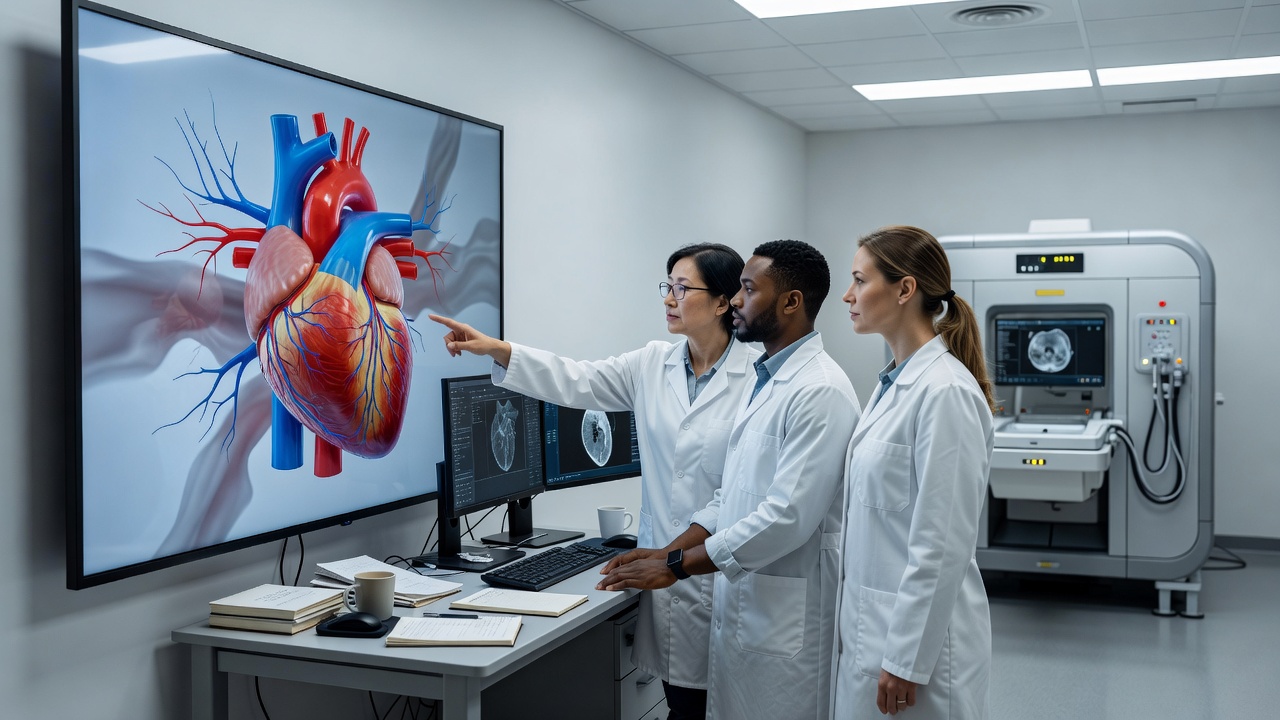
The Vivid Lab Research team has developed a new real-time 3D rendering method for medical scans that processes CT and MRI datasets instantaneously. The approach enables interactive visualization of anatomical structures without precomputing models or relying on specialized hardware beyond standard GPUs. Early benchmarks indicate frame rates exceeding sixty per second even for high-resolution volumes exceeding one gigabyte in size.
Technical Foundations of the Method
Core innovations include a hybrid ray-marching and splatting pipeline optimized through custom shader code and memory-efficient data structures. Researchers incorporated adaptive sampling rates that prioritize regions of clinical interest while maintaining overall image quality. Machine-learning components predict occlusion and lighting conditions to further accelerate computation. Validation involved comparisons against established offline renderers using blinded radiologist assessments confirming diagnostic equivalence. The pipeline supports direct loading from DICOM archives and includes real-time clipping and transfer-function editing tools. Performance tests across multiple scanner vendors demonstrated consistent results with minimal preprocessing overhead.
Clinical Implications and Ongoing Work
Surgeons report improved spatial understanding during preoperative planning sessions when using the live 3D views. Training programs for medical students have integrated the tool to illustrate dynamic physiological processes. The team is extending compatibility to ultrasound volumes and exploring cloud-assisted collaboration features for remote consultations. Continued collaboration with hospital partners focuses on workflow integration and regulatory pathways. This advancement reinforces Vivid Lab's commitment to practical computational solutions in healthcare imaging with measurable gains in speed and usability.